
BUILDING BRANDS, ONE DECISION AT A TIME

It's Not Just Marketing—It's About Understanding People
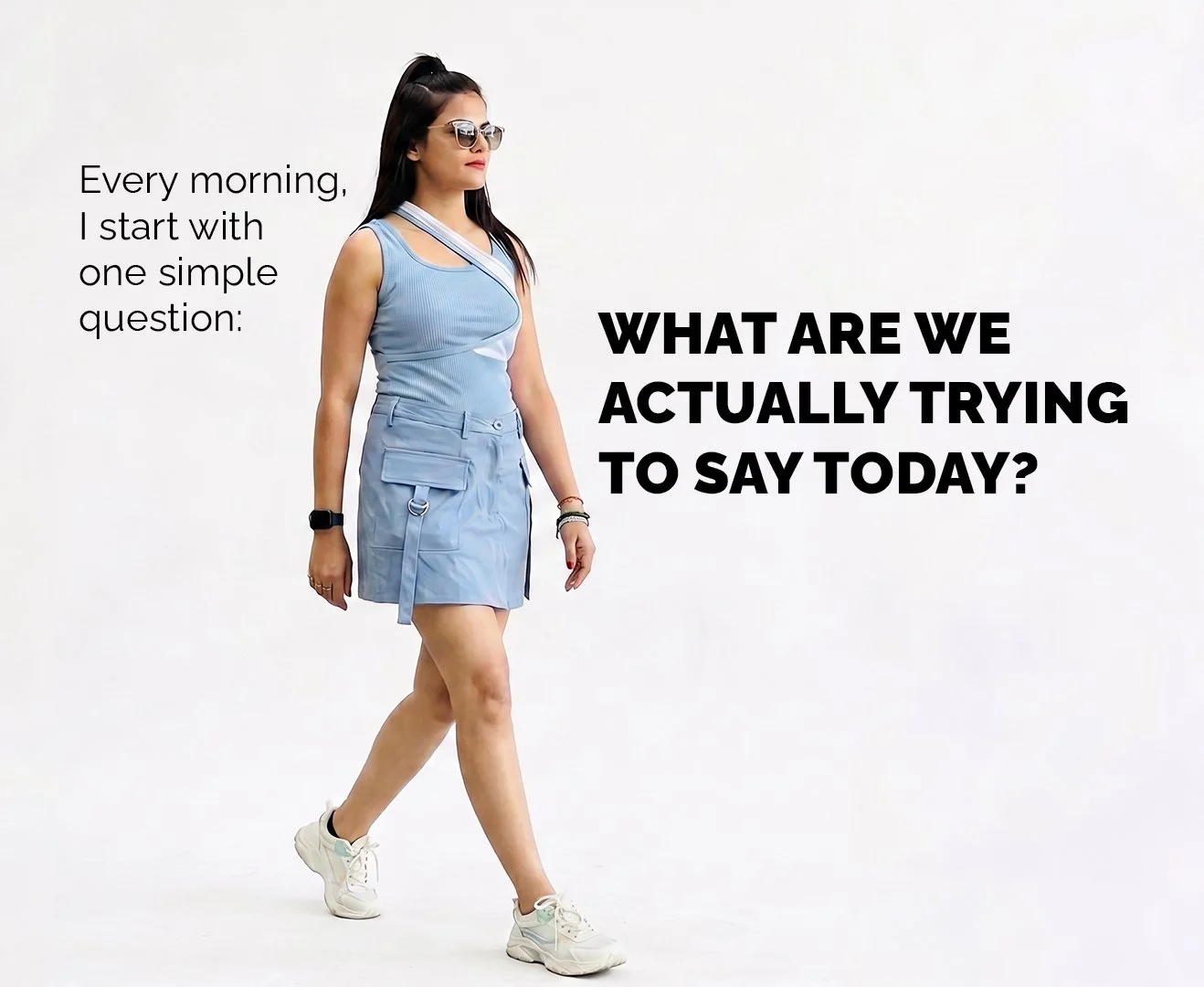
At the onset of the day, I start with a question: What are we really trying to say today? Not just as a brand, but as people talking to other people. After more than a decade in marketing, I've learned that the best campaigns don't come from boardrooms—they come from understanding the everyday moments that matter to your customers.

I'm currently the Marketing Director for Vermont Violins and V. Richelieu, and before that, I spent over four years with Skechers in South Asia. But titles only tell part of the story. The real work happens in the spaces between—when you're figuring out why a campaign isn't landing, when you're rallying a tired team before a launch deadline, or when you finally crack the code on what makes your audience actually care.

White outline of a flame with the word "energizers" written below on a black background.

HOW I GOT HERE: THE MESSY, REAL JOURNEY

I didn't start out knowing I'd end up in marketing leadership. Like most careers, mine was a combination of curiosity, luck, and saying yes to opportunities that scared me a little.

My foundation started in commercial art and design. I loved the creative process—the way a visual could communicate something words couldn't. But somewhere along the way, I realized I was equally fascinated by the "why" behind the work. Why does this design resonate with one audience but fall flat with another? What makes someone stop scrolling and actually pay attention?

That curiosity led me to pursue marketing management, then a degree in marketing from the University of London. But honestly? The learning came from the projects that didn't go as planned. The campaign looked perfect on paper, but failed in execution. The product launch, where we completely misread our audience. Those failures taught me more than any certification ever could.

A line drawing of a landscape with trees, hills, and a sun, with the words "balance & strength" written below.

WHAT MY DAY LOOKS LIKE

People often ask what a Marketing Director does all day. The truth? It's a mix of strategy, problem-solving, and a lot of conversations.

First - The Strategy Work

I usually spend the start of my day on the work that requires focus. This might be analyzing campaign performance from the previous week—not just looking at numbers, but understanding the story they're telling. Why did engagement spike on Tuesday? Why did that social ad perform better in California than Vermont? The data doesn't just show you what happened; it helps you figure out what to do next.

I also use this time to map out upcoming campaigns. For luxury brands like the ones I work with now, this means thinking about how we honor traditional craftsmanship while speaking to modern consumers who care about sustainability and authenticity. It's a delicate balance—you can't just slap "eco-friendly" on something and call it a day. People can smell inauthentic marketing from a mile away.

Next - The People At Work

I'm usually in meetings. And I know meetings get a bad rap, but the good ones? They're where the magic happens.

I might be working with the sales team to understand what objections they're hearing from customers. Or collaborating with our operations team to make sure a promotion we're planning is actually feasible. Or sitting down working on creatives and design—not just "I don't like that blue," but explaining the psychology of why our audience responds to certain visual cues.

One of the most valuable lessons I learned at Skechers was that marketing doesn't exist in a vacuum. We managed budgets over $200,000, which sounds impressive until you realize that every dollar represents a choice. Do we invest in influencer partnerships or boost our SEO content? Do we go big on one hero campaign or spread our resources across multiple touchpoints? These decisions require input from everyone—from the finance team to the warehouse staff who'll handle the increased orders if the campaign succeeds.

Ending The Day

Finally, when I dive into the creative side, brainstorming new campaign angles or work on positioning for a product launch.

I remember when we were launching a new running shoe line at Skechers. The product team was focused on technical specs—cushioning, weight, breathability. All important, sure. But our team kept asking: What's the emotional hook? What's the story that makes someone choose these shoes over the dozen other options?

We landed on something simple: "Your run, your rules." It wasn't about being the fastest or having the most advanced technology. It was about permitting people to define success on their own terms. That campaign ended up winning a Gold Award at the e4m Neons OOH Awards, but more importantly, it connected with people because it reflected something they were already feeling.

Black background with five white wavy lines stacked; the word 'skills' written in white lowercase cursive at the bottom.

THE HARD PARTS NOBODY TALKS ABOUT

Here's what they don't tell you about marketing leadership: you're going to fail. A lot.

Embracing the Learning Curve of Leadership:

I've launched campaigns that I was absolutely convinced would be home runs, only to watch them barely register with our audience. I've had disagreements with executives who thought they knew our customers better than the research showed. I've had to deliver feedback to team members that their work wasn't hitting the mark, knowing how much they'd poured into it.

The Friction Point: Global Standards vs. Regional Nuance:

The project that taught me the most was actually one of my biggest challenges at Skechers. We were trying to align our regional South Asia strategy with global product initiatives, and there was this constant tension between "this is what works globally" and "but our market is different."

The Glocal Approach: Maintaining Identity through Local Adaptation:

Both sides were right, which made it harder. Yes, we needed global brand consistency. But also yes, Indian consumers had different expectations and behaviors than American or European customers. The breakthrough came when we stopped thinking about it as an either/or and started looking for the both/and. How could we maintain the brand's core identity while adapting its expression to local culture?

It required countless calls with the global team, deep dives into local market data, and, honestly, some uncomfortable conversations. But that tension—between global vision and local execution—is where the interesting work lives.

Line drawing of a sun partially obscured by clouds with the word 'accomplishments' written below.

WHAT I HAVE LEARNT ABOUT BUILDING BRANDS

After years of doing this work, here's what I've come to understand:

Brands Are Built in the Details

Everyone wants the big, splashy campaign. But brands are really built in a thousand small decisions. It's the tone of your customer service emails. The user experience on your website's checkout page. The way your sales team talks about your products. Marketing's job isn't just to create campaigns—it's to be the guardian of how your brand shows up everywhere.

Data Tells You What, People Tell You Why

I'm obsessed with analytics. Google Analytics, social insights, A/B testing results—I dive into all of it. But data only shows you what happened. To understand why, you need to talk to actual humans. I've learned as much from sitting in on customer service chats and team discussions as I have from any dashboard.

Good Marketing Solves Real Problems

The campaigns I'm most proud of aren't the ones that won awards (though those are nice). They're the ones who solved actual problems for our customers. At Vermont Violins, we're not just selling instruments—we're helping musicians find tools that let them express themselves. Our marketing needs to reflect that we understand what's at stake for them.

You Need Both Confidence and Humility

You have to believe in your strategy enough to defend it, but stay humble enough to change course when the data says you're wrong. I've seen too many marketers (including past versions of myself) dig in on ideas that weren't working because we'd invested so much ego in them.

White outline of a hand with a leaf, suggesting growth or nature, with the word training written below, all on a black background.

THE WORK THAT KEEPS ME GOING

The Challenge of Authentic Connection:

Some days, I'll be honest, marketing feels like shouting into the void. You craft this perfect message, pour resources into getting it in front of people, and... crickets.

But then there are the moments that remind you why this work matters.

Driving Purpose: Sustainability as a Brand Pillar:

Like when we launched a sustainability initiative around wood preservation for the violins we work with now. I wasn't sure how it would land—was this something our customers actually cared about, or was it just something we cared about? Turns out, musicians are deeply connected to the materials of their craft. The response was overwhelming. People shared our content, wrote to us about their own commitment to sustainability, changed their purchasing decisions because of it.

Winning Small: Mentors, Retailers, and Real Growth:

Or the time a retail partner called to say that a campaign we'd developed had completely changed how their sales staff talked about our products. We hadn't just given them marketing materials—we'd given them a story they believed in and could share authentically.

Or even the small stuff: when you see engagement spike on a piece of content you poured yourself into, or when a team member you've been mentoring presents an idea that's genuinely better than what you would have come up with.

Tools That Helped My Growth:

  • Digital Marketing Certifications: University of Vermont, Google (GAIQ, Fundamentals, Advanced).

  • Entrepreneurship Insights: MITX Bootcamp on customer identification.

  • Formal Education: Bachelor of Science in Marketing (University of London), Marketing Management (NMIMS).

  • Creative Arts: Graphic & Web Design (Arena Multimedia), Commercial Art (Nirmala Niketan Polytechnic).

Mona Patel is a marketing professional with over a decade of experience.

HOW I APPROACH NEW PROJECTS

When I start working with a new brand or on a new campaign, I don't immediately jump to tactics. I start with questions:

Who are we really talking to? Not demographics—actual people. What keeps them up at night? What makes them excited? What are they trying to accomplish, and how might we help?

What makes this brand truly different? Not what we say makes us different—what actually does? Sometimes the answer isn't in the product at all. It's in the experience, the values, the community.

Where is the conversation already happening? I don't believe in interrupting people with marketing they don't want. I believe in joining conversations they're already having in places where they're already paying attention.

What does success actually look like? Revenue is important, but it's not the only metric that matters. Brand perception, customer loyalty, team alignment—these things impact the bottom line too, just on a longer timeline.

THE TEAM SIDE OF THINGS

One of the best parts of this work is building and leading teams. I've managed everyone from junior coordinators to senior strategists, worked with creative agencies, media buyers, influencers, and more vendors than I can count.

Here's what I've learned about getting the best out of people:

Give context, not just tasks. When someone understands the "why" behind what they're doing, they bring better ideas to the table. I try to include my team in strategy conversations, even when I could just hand down assignments.

Celebrate the small wins. Launching a major campaign is exciting, but most of the work is incremental when someone nails a subject line that doubles our open rate, which deserves recognition just as much as an award-winning campaign.

Create space for experimentation. Some of our best ideas have come from side projects or "what if we tried..." conversations. Not everything needs to be a major initiative. Sometimes you just test something small and learn from it.

Be honest about challenges. When budgets get cut or timelines get compressed or strategies need to pivot, I don't pretend everything's fine. I bring my team into the problem-solving. They usually have better ideas than I would have come up with alone.

WHAT I AM THINKING ABOUT NOW

Right now, I'm fascinated by the intersection of luxury marketing and sustainability. How do you market craftsmanship and heritage while also addressing modern environmental concerns? How do you reach younger consumers who value both quality and ethics?

I'm also interested in how marketing is evolving post-pandemic. We all went digital by necessity, but now there's this hunger for tangible, real-world experiences again. The brands that figure out how to blend digital efficiency with human connection are going to win.

And honestly, I'm thinking a lot about authenticity. Consumers are sophisticated. They can tell when brands are performing values versus actually living them. The marketing that works now—and will work in the future—is rooted in genuine truth about who you are and what you stand for.

THE CREDENTIALS

(Because They Matter, But They're Not Everything)

As you must have read above, I've earned various certifications over the years—Google Analytics, digital marketing courses from the University of Vermont, and an entrepreneurship bootcamp from MITX. I have degrees in marketing and commercial art. I'm proficient in all the tools you'd expect: Adobe Creative Suite, various marketing platforms, analytics tools, and CRM systems.

These credentials opened doors, especially early in my career. They gave me frameworks and language. But the real learning has come from doing the work—from campaigns that exceeded expectations and campaigns that fell flat, from customers who loved what we created and customers who didn't get it at all.

Awards are similar. The Gold at the e4m Neons OOH Awards, the Best Customer Experience recognition, Marketing Team of the Year—these are validating. They're proof that peers in the industry recognized the work. But the real reward is seeing a strategy actually move the business forward, seeing a team member grow into a leadership role, seeing a brand find its voice.

MY HEIGHTS:

  • SBA Exporter of the Year Award by the Vermont State Government: Innovative product promotion and exports of GaiaTone, an eco-friendly ebony alternative and the commitment to sustainable and innovative business practices.

  • Award-Winning Campaigns: Gold for Skechers GORun 7 (e4m Neons OOH Awards).

  • Industry Recognition: Best Customer Experience in OOH (e4m Indian Marketing Awards).

  • Team Excellence: Marketing Team of the Year (e4m Indian Marketing Awards).

  • Successful Product Launches: Recognized for innovation and impressive ROI.

  • Global Alignment: Integrating US product conference insights into regional strategies.

  • Best Website Design: Winner at Creative Minds 2015, Arena Multimedia.

  • Award-Winning Campaigns: "Best Execution - Final Year Campaign" for FedEx Local (2010), and "Runner Up - City Level Poster Competition" (FWA Organization, 2010).

  • Artistic Accolades: CAG Scholarship (2nd Place) Ad. Campaign, "Best Illustration - SYCA" (Nirmalaniketan Polytechnic, 2009), and "Best Outdoor Sketching - FYCA" (Nirmalaniketan Polytechnic, 2008).

IF WE WORKED TOGETHER

Here's what you'd get from working with me:

Strategy grounded in reality. I don't believe in marketing for marketing's sake. Everything needs to connect back to real business objectives and serve actual customer needs.

Honest feedback. If I think something isn't going to work, I'll tell you—along with why I think that and what I'd suggest instead. I've learned that the kindest thing you can do is be direct.

Collaboration, not dictation. The best ideas come from diverse perspectives. I don't have all the answers, and I don't pretend to. I want to work with people who'll challenge my thinking and make the work better.

Commitment to the outcome. When I take on a project, I'm invested in its success. Not just the launch, but the results. I'll stay with it, optimize, adjust, and keep pushing until we get where we need to go.

LET’S TALK

If any of this resonates with you—if you're building something you care about and need someone who approaches marketing as both art and science, as both strategy and story—I'd love to hear about it.

I'm not interested in just executing tactics. I want to work with brands and individuals that are trying to do something meaningful, that care about their customers, that are willing to put in the work to get it right.

INTERESTS

Icons representing photography, videography, graphic design, painting, and audio editing.

TECHNICAL PROFICIENCY

Icons representing Microsoft Word, Excel, PowerPoint, Outlook, a link, and a hot air balloon.